



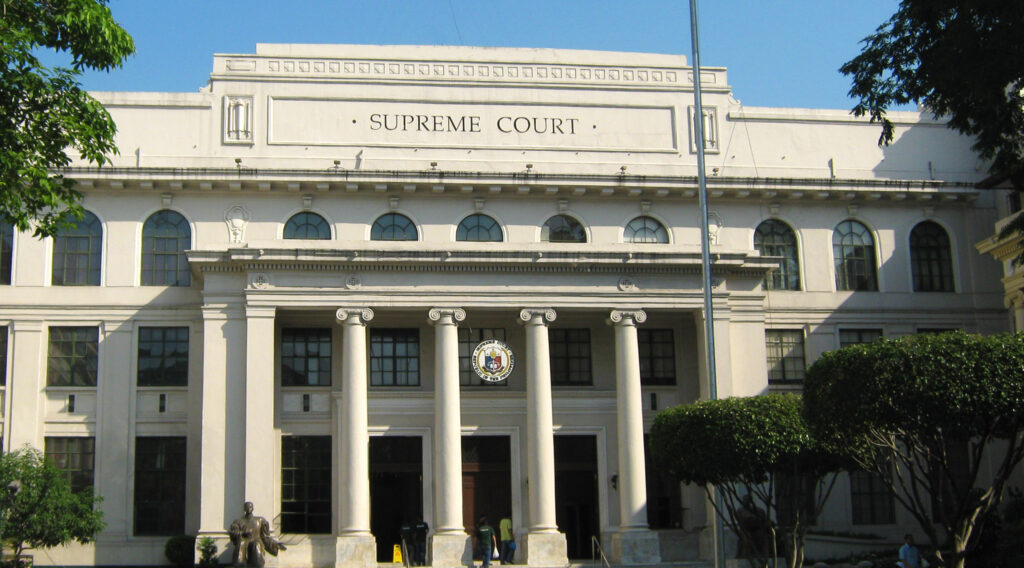
MANILA – The Supreme Court (SC) has released rules to promote gender-fair language and courtroom etiquette in accordance with the adoption of Republic Act 11313, also known as the Safe Spaces Act, which forbids and penalizes various forms of gender-based sexual harassment.
On Wednesday, the SC stated that the guidelines had been approved during its en banc deliberation last Tuesday.
The tribunal encourages the use of non-sexist language in official documents, communications, and issuances.
It cited, for example, the usage of “person” rather than “man” or “humanity” rather than “mankind”.
The use of masculine terminology for professions or jobs is discouraged, such as “chairperson” instead of “chairman” or “business owners” instead of “businessmen,” according to the statement.
The rules are part of the Committee on Gender Responsiveness in the Judiciary’s (CGRJ) initiatives, which are led by Associate Justice Amy Lazaro-Javier. They emphasize sensitivity to people of all sexual orientation, gender identity and expression, and sex characteristics (SOGIESC).
Under the Safe Spaces Act, gender is defined as “a set of socially ascribed characteristics, norms, roles, attitudes, values, and expectations identifying the social behavior of men and women, and the relations between them.”
“Our courts are courts of evidence, and its power to take judicial notice of matters is limited. Therefore, courts cannot and should not perpetuate gender stereotypes, which rest on unfounded generalizations regarding the characteristics and roles of binary and non-binary genders, but indisputably influence the perspectives of the judges and litigants alike. This is evident with respect to matters at issue before the courts, as well as in the language the courts employ in adjudication,” the high court added.

4 Replies to “SC establishes guidelines for the use of gender-fair language”